Tickets, seats and the hour
Teatro Flamenco Triana show
What a ticket for Teatro Flamenco Triana covers, how a theatre differs from a tablao, who it suits and how to book, checked against the theatre's own pages.
Reserve a seat in Triana ↗Quick answer
Teatro Flamenco Triana is a theatre on Calle Pureza, in Seville's Triana district, giving about an hour of live flamenco with no interval. The GetYourGuide ticket suits you if you want a seated show, a 24-hour free-cancellation window and the choice of paying later. Nothing is served in the room, under-6s are not admitted, and the theatre asks for silence and no photography.
What you are buying
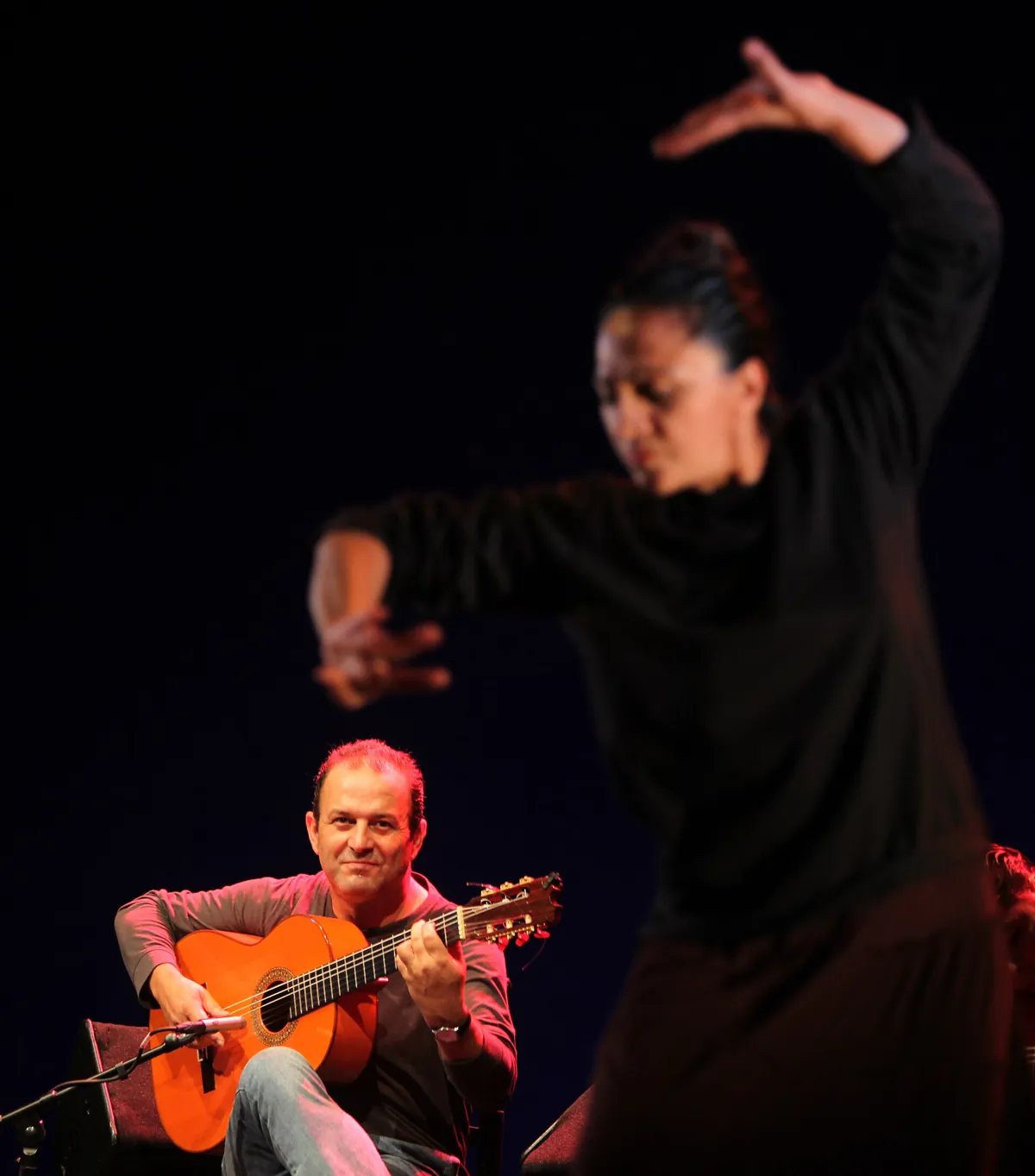
The GetYourGuide ticket is an entry ticket to the flamenco show at Teatro Flamenco Triana, a theatre at Calle Pureza 76 in Triana, the district facing central Seville across the Guadalquivir. The show lasts about one hour, and the theatre's own pages say there is no interval. The ticket covers admission to the show and nothing else. The provider is the theatre itself, so you are booking its own performance and not a tour, a transfer or a meal. Start times appear on the booking page when you check a date.
A theatre, not a tablao
The GetYourGuide title calls the show tablao-style, but the theatre describes itself differently: a theatre devoted only to flamenco, with seats facing a stage, and not one more tablao. A tablao, in Wikipedia's definition, is a place that stages flamenco, typically with drinks on offer and sometimes tapas or a full meal. The format spread in the 1960s, succeeding the nineteenth-century cafés cantantes. Nothing is eaten or drunk in this room. That difference matters for planning: a tablao evening can include a table and food, while a theatre evening is an hour of watching. If you want a table and a meal around the show, one of the booking cards on the home page has that.
The room
The theatre's site says the building was a neighbourhood confectionery, café and ice-cream shop before a restoration in 2017 turned it into a theatre. The tiles covering its walls are the ones that decorated the original shop. It has two terraces: one over Calle Pureza with the Giralda on the horizon, and a larger one facing the tower of the Church of Santa Ana. The theatre describes the room as intimate by design and says every seat offers closeness to the stage. Its technical page describes a professional stage designed specifically for flamenco, with its own sound and lighting equipment.
What the hour is like
Dancers, singers and a guitarist perform without a break, and UNESCO's three-part description of flamenco, singing, dancing and guitar, is a handy frame for the hour. The theatre says the format is stable but the artists interpret freely, so no two shows run the same, and that the cast is renewed regularly. It also says every artist on its stage has been through a selection process. Expect solo moments for singer, dancer and guitarist as well as passages where all three work together. Because the programme changes by day, nobody can tell you in advance which forms you will hear. The guide to Triana's flamenco forms explains what to listen for.
Read next: Flamenco forms from Triana
Seats and when to book
The theatre's own booking page sells seats by zone of the room: Promo, General and Premium areas, plus a separate box level. The GetYourGuide page lists the seating options for your date, and they may differ from the theatre's, so read the seating line on whichever page you use. The theatre advises booking a day or two ahead at least, and says weekends and high season often sell out earlier. Its box office sells whatever remains on the day. A GetYourGuide booking can be cancelled for a full refund until 24 hours before the start, and it lets you reserve first and pay afterwards. If your dates are fixed, do not wait.
On the day
The start time is on your confirmation. Arrive with a few minutes to find your seat, since guests are asked not to leave once the performance is under way, and set your phone to silent. The theatre keeps a few rules to protect the show, and they apply to the whole hour, from the moment the artists start until the last note. If you arrive early, the theatre's site describes its terraces as places to pause before the show.
- Silence is requested during the performance.
- Photography and video recording are not allowed.
- Food and drinks are not allowed in the theatre.
- Guests are asked to stay in the room unless they must leave.
- Children under 6 are not admitted.
- If a wheelchair user is in your party, email the theatre before you go.
Getting there and the evening around it
Triana is reached from central Seville over the Isabel II bridge, known as the Puente de Triana, and the theatre stands on Calle Pureza, the main street of the historic quarter. Its site lists taxi ranks at Plaza de Cuba and Plaza del Altozano, a metro stop at Plaza de Cuba, public car parks at Plaza de Cuba and beside the Triana market, and nearby city bus stops. Calle Betis, along the river, has many of the neighbourhood's restaurants and bars, according to Wikipedia. Since the room allows no food or drink, dinner goes before or after.
Read next: An evening on Calle Pureza
Families and young children
The theatre says the show suits the whole family and recommends it from age 6, and that children under 6 are not admitted to the room. The hour has no interval and the room allows no food or drink, so younger visitors who struggle to sit quietly may find it long. A good plan is to eat before you arrive and keep any snacks for the street outside afterwards. If you are bringing a child close to the age limit, check the rule before you book.
Access and language
The GetYourGuide ticket is wheelchair accessible. The theatre's own site mentions a lift, a ramp, adapted toilets and seats for visitors with reduced mobility, and it wants to hear about any needs when you book. It adds that there are no subtitles or translation, because flamenco speaks through movement, music and emotion. The songs are sung in Spanish. UNESCO describes flamenco lyrics as brief and simple, which helps if you do not follow the words.
Other ways in, and where the money goes
The theatre's own site lists two longer formats that are not the GetYourGuide ticket: a one-hour introductory flamenco dance class before the show, and the same with a welcome or closing drink in the theatre. Both need booking 48 hours ahead, are priced on request and, the theatre says, are open to individuals and groups; the class is taught in its own studios. The theatre says it is a project of the Cristina Heeren Foundation and that what it collects goes to training and to producing flamenco shows. The foundation's site calls Teatro Flamenco Triana the theatre built into its flamenco school, which explains why the theatre presents itself as a cultural project.
Read next: Flamenco in Triana, Seville
Who this isn't for
Pick another format if you want dinner or a drink in your hand, because nothing is allowed in the room. Skip it with a child under 6, who will not be admitted. It is also not the right choice if you want to photograph or film the artists, or if you like a lively, talkative room where the audience calls out. This is a seated hour in near silence, and the theatre asks guests not to leave unless they must. If that sounds like what you came for, book a date with the seating you want.
Frequently asked questions
How long does a show at Teatro Flamenco Triana last?
Roughly an hour with no interval. Your confirmation names the start.
Where is the theatre?
At Calle Pureza 76 in Triana, the district across the river from central Seville.
Can I eat or drink during the show?
No. Eating and drinking are not permitted in the room, and the ticket covers the show alone. Have dinner before or after.
Is there a minimum age?
Children under 6 are not admitted. The theatre says the show suits families from age 6.
Can I get a refund?
Yes. On the GetYourGuide ticket, cancelling a day or more ahead returns the full fare. Tickets bought from the theatre follow its own terms.
Are there subtitles?
No. The theatre says there are no subtitles or translation. The songs are sung in Spanish and the dance needs no words.
Sources