The barrio behind the show
Flamenco in Triana, Seville
Why Triana matters to flamenco: its river, potters and Romani families, the forms tied to its streets and the flamenco school beside the theatre.
Reserve a seat in Triana ↗Quick answer
Triana is the Seville district across the Guadalquivir where potters, sailors and many flamenco singers and dancers lived. Wikipedia links forms such as the soleá, the Triana style of tangos and an ornate Triana siguiriya to it. UNESCO lists flamenco as intangible heritage, and Teatro Flamenco Triana stages a one-hour show on Calle Pureza, next to a flamenco school.
Where Triana is
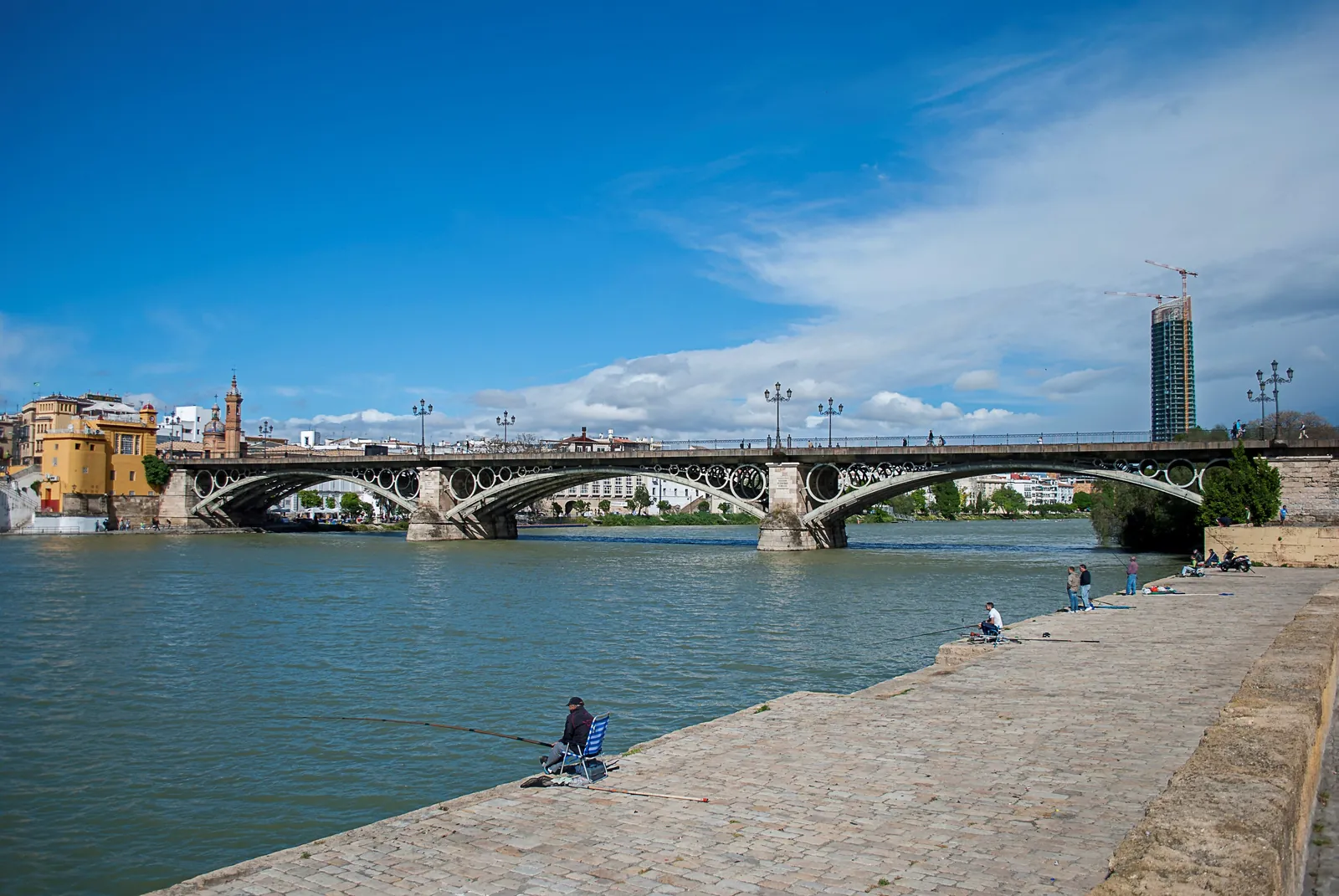
Triana lies on a tongue of land between two branches of the Guadalquivir, on the river's west bank, and is also an administrative district of Seville. Wikipedia notes that, being historically cut off from the main city, it was called an arrabal, a suburb. Today the bridge known as the Puente de Triana, or Isabel II, links it to the centre, and Wikipedia calls the bridge together with the small chapel at its western end the barrio's best-known symbol. Los Remedios to the south and La Cartuja to the north are usually counted with it. Residents are called trianeros, and they identify strongly with the place. Wikipedia adds that Triana has its own festivals as well as its pottery and flamenco.
What the name means
Nobody is sure where the name comes from, and Wikipedia gives three explanations, none of them settled history. A legend holds that the Roman emperor Trajan, born in nearby Italica, founded a colony here, and that Triana derives from Trajana. Another theory combines the Latin tri, three, with a Celtiberian word for river, since the Guadalquivir once split into three branches nearby. A third derives it from the Latin phrase trans amnem, meaning those beyond the river. Each explanation points to the same fact: Triana is the side across the water, and its people have long treated that as an identity. For a visitor the useful point is the geography, since the river is what makes the neighbourhood feel like a place apart.
A short history of the quarter
Wikipedia dates the first settlements to the Roman period and says the neighbourhood grew around a castle built in the 10th century. A pontoon bridge built in 1171 joined it to Seville. Ferdinand III of Castile destroyed the citadel and the bridge before taking Seville in 1248. The castle site later became the Castillo de San Jorge, and from 1481 to 1785 it was the seat of the Spanish Inquisition. Floods were frequent until the river channels were rebuilt after 1950, and residents sheltered in the castle and the Church of Santa Ana. The bridge you cross today, the Puente de Isabel II, dates from the 19th century and has become a symbol of the barrio.
Sailors, potters and singers
Wikipedia says Triana was traditionally populated by sailors and potters, construction workers and artisans, with many bullfighters and flamenco singers and dancers living there too. The bullfighter Juan Belmonte, born elsewhere in Seville, moved to Triana at the age of three. Andalucia.com says the pottery industry dates back to Roman times and used clay from La Cartuja, north of the district, and that Triana was an old gitano quarter until the 1950s. The Centro Cerámica Triana opened in July 2014 in the old Santa Ana pottery factory to show the craft, with kilns, raw materials and ceramics from Moorish times to the 1950s.
Read next: Triana tiles and pottery
The corrales and the Romani families
A large Romani community once lived in Triana, Wikipedia says, mostly in corrales: shared houses ranged around a courtyard and its fountain. Development pressure in the later 20th century emptied most of them. The survivors have heritage protection, among them houses on Alfarería and Castilla streets and Corral Herrera, from 1909, on Pagés del Corro. That street was once the Cava de los Gitanos, where Romani families clustered before the 1970s redevelopment moved them out. UNESCO says the Gitano community has played an essential part in flamenco's development.
Forms tied to Triana
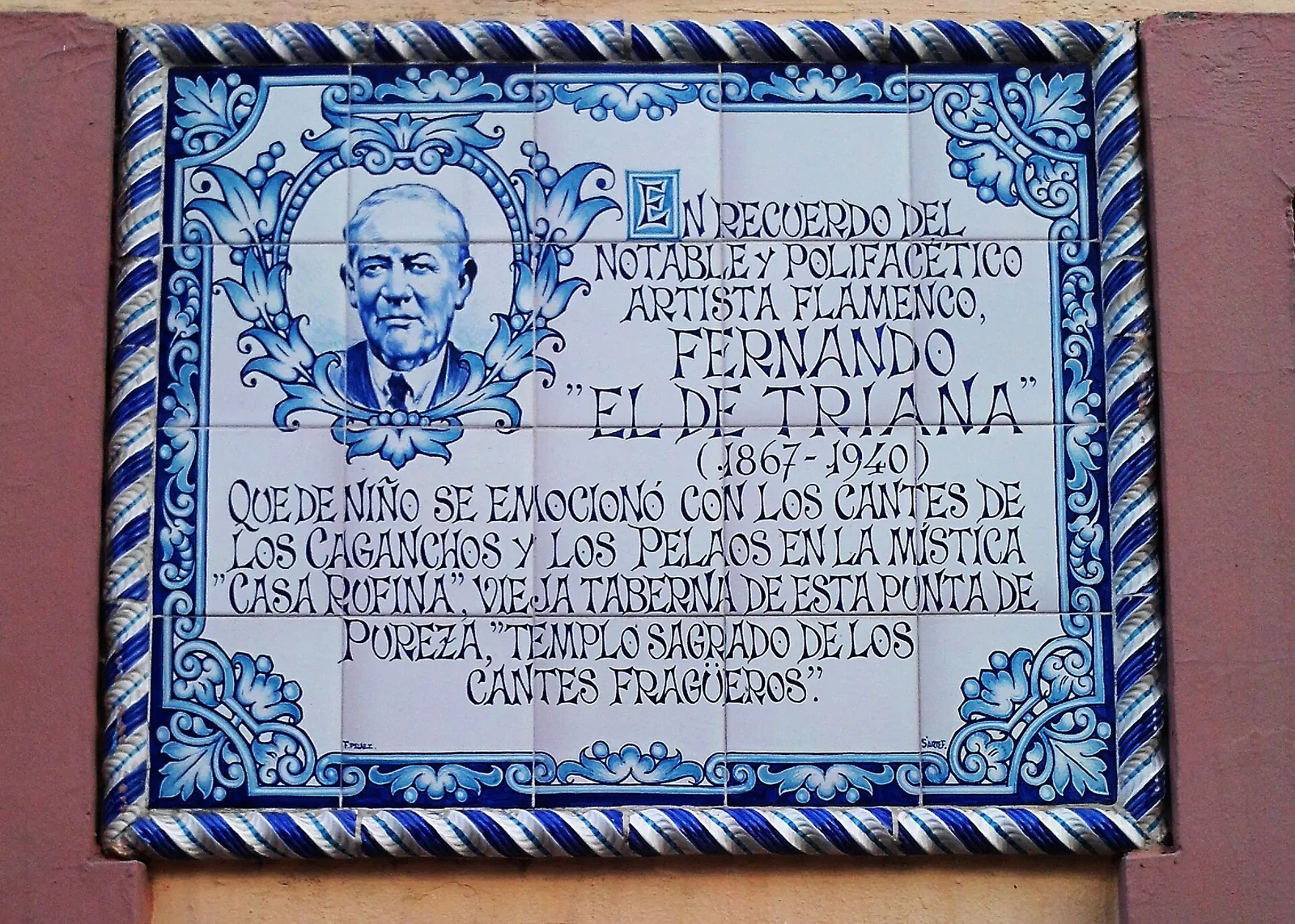
Wikipedia ties several flamenco forms to Triana. One account holds that songs from Ronda reached Triana, with its tradition of corridos, and became the soleá there, and that the jaleos arose in Triana from the festive singing of corridos and soleares. Its entry on tangos associates the Triana style with Pastora Pavón, La Niña de los Peines and El Titi, and its entry on the siguiriya calls Frasco el Colorao's Triana style very ornate. The siguiriya, it adds, is purely Romani in origin. These are accounts of tradition, not a map of what you will hear on a given night.
Read next: Flamenco forms from Triana
Flamenco on the UNESCO list
Flamenco joined UNESCO's list of the world's intangible cultural heritage in 2010. The entry describes a single art built from song (cante), movement (baile) and guitar (toque), centred on Andalusia, with further roots in Murcia and Extremadura. UNESCO says the art is handed on in dynasties, families, social groups and flamenco clubs, and that it turns up at church ceremonies, religious festivals and private parties. Many communities treat it as a badge of who they are, the Gitano community most of all. A district of close streets and big families suits that picture of how an art travels.
A school next to the stage
Teatro Flamenco Triana is a project of the Cristina Heeren Foundation, whose flamenco school offers annual and summer courses in dance, singing and guitar. The foundation's site says its students get discounts on performances at the theatre, which it calls its in-house theatre, and the theatre says its profits go to scholarships and training. The foundation presents its programme as practical and technical training, with subjects such as compás and the traditional codes of the tablao. The theatre also describes the foundation as a centre of reference for flamenco study with students from more than 40 countries, which is the theatre's own claim.
Calle Pureza and the streets nearby
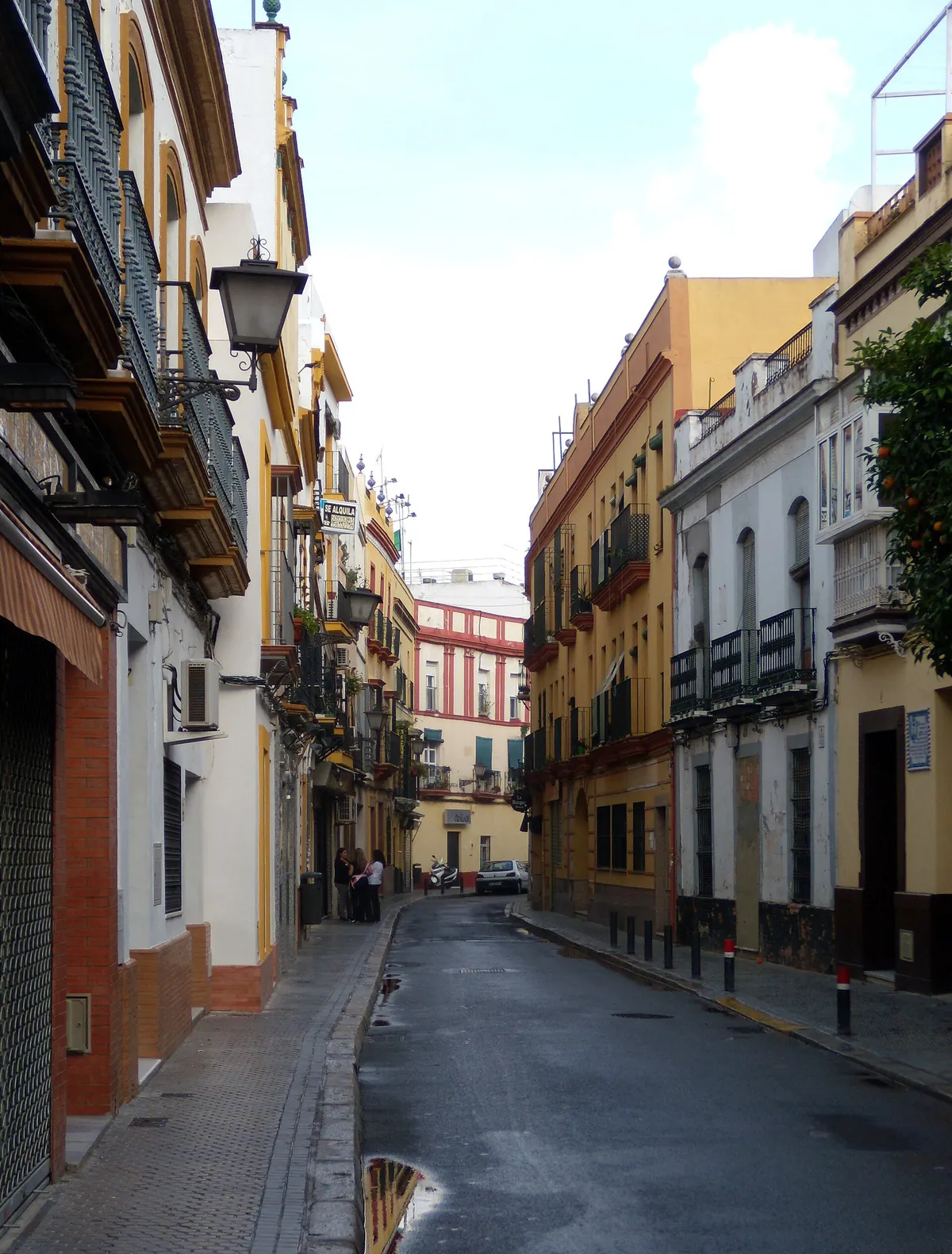
The theatre is at number 76 on Calle Pureza, the long street running south from the Altozano through the old heart of Triana. Two landmarks line it: the Church of Santa Ana, which locals treat as Triana's cathedral, and the Capilla de los Marineros, where the La Esperanza de Triana brotherhood has its seat. Santa Ana, Wikipedia says, was Seville's first Catholic church after the 1248 conquest. Calle Betis runs along the waterfront and has many of the city's restaurants and bars, with a view across to central Seville. North of Calle Pureza, the Altozano square is the traditional gateway to Triana from the bridge, with monuments to the bullfighter Juan Belmonte and to the flamenco arts.
Festivals that mark the year
Holy Week looks different in Triana, Wikipedia says, with its own character and two famous brotherhoods, La Esperanza de Triana and El Cachorro, the latter named after a sculpture of the dying Christ. The other big date is the Velá de Santa Ana, a street festival on Calle Betis from 21 to 26 July with sherry, sevillanas, roasted sardines and a greasy-pole contest, the cucaña, over the river. Wikipedia traces the Velá to the 13th century and ranks it second in the city after the April Fair. If your visit falls in either week, expect the district to be busier and louder than usual.
Who this isn't for
This page gives context rather than directions. For streets, opening hours and routes, use a map and the sources listed below, since timetables and exhibitions change. Triana's old corrales are mostly gone or private, so do not expect open courtyards. Wikipedia adds a caution about stereotypes: with most corrales gone, the old picture of Triana as a refuge for gypsies no longer fits. And if you only want to know how to book a seat at the theatre, the tickets guide answers that without the history.
Read next: Teatro Flamenco Triana show
Frequently asked questions
Is Triana the birthplace of flamenco?
Triana is called a cradle of flamenco, and Wikipedia ties several forms to it. UNESCO places flamenco's heartland in Andalusia as a whole, with roots in Murcia and Extremadura too.
Where is Triana?
Across the Guadalquivir from the old centre, joined to it by the Isabel II bridge, known as the Puente de Triana.
What is a corral?
A shared house of small rooms opening onto a courtyard with a fountain. Many Romani families in Triana lived in corrales, and most have gone.
What is the Cristina Heeren Foundation?
A flamenco school in Seville that offers dance, singing and guitar courses. Teatro Flamenco Triana is its in-house theatre.
Does Triana have its own flamenco style?
Wikipedia describes Triana styles of tangos and the siguiriya, and says the jaleos arose there. The show's programme is chosen by the artists on the day.
Sources